Pastéis de Nata, the recipe and of course coffee
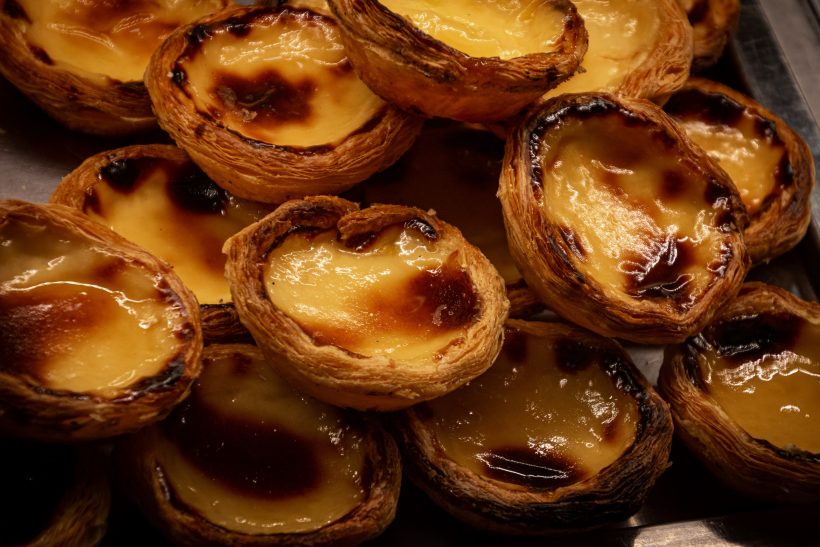
Pastel de Nata – Portuguese Custard Tarts
One thing I have learnt in the last 25 years is that Portuguese people have a sweet tooth. This is very visible while walking along most city and village streets. You will have a hard time finding a road that does not have a “Pastelaria”. Pastelaria is the Portuguese word for Pastry/Bakery shop, and it is a place most Portuguese people visit daily. The dangerously sweet temptations lurk everywhere!
The most famous cake of Portugal is the “Pastel de Nata” the Portuguese Custard Tart.
The recipe for these custard tarts dates back over 300 years. The original recipe was created by the monks in the Jeronimo Monastery in Belém, a part of Lisbon.

Fabrica de Pastéis de Belém
300 years ago the nuns and monks used egg whites to starch their clothes, the remaining egg yolk then became the main ingredient for desserts. The monks started to sell their Pastéis de Nata to maintain the monastery. When the monastery finally closed in 1834, the recipe was sold to the Fábrica dos Pastéis de Belém who subsequently opened its doors in 1837. Today Belém it is still the most renowned place to buy this delicious pastry.

Fábrica dos Pastéis de Belém
If you visit the Fábrica dos Pastéis de Belém, a warning! Take some patience with you as you queue to buy this speciality. Most of the time you will have to wait but both the Pastéis and the Fábrica are worth it. The interior of the Fábrica is decorated with many beautiful Portuguese tiles and the tarts are exquisite.


So you have arrived and now the best bit… enjoy your pastel de nata (do not forget to cover it with cinnamon) together with a delicious cup of coffee. I will share the recipe for the Pastéis de Nata at the bottom of this post.
This brings me right to the next topic, coffee! There is a true coffee culture in Portugal with many different ways of drinking coffee. Portuguese coffee is usually strong. The best-known one is “café” which is equal to our espresso. It is a small but strong cup of coffee which the Portuguese normally drink a few times a day.
To make things a bit more confusing for the tourist this same cup of coffee is called a “bica” in the Algarve, a “cimbalino” in Porto and a café in Lisbon. If this is not confusing enough, there are even more variations. A “café pingado” an espresso with a little milk, a “café cheio” espresso with a little more water and a “café com cheirinho”. This last one is a man’s favourite coffee but quite honestly, I do not dislike it either …. This is in fact, an espresso with a dash, or in Portuguese, a little smell, (cheirinho) of a strong, alcoholic drink. Are you getting confused?


Then we have the “meia de leite” which translates as a coffee with milk made of 50% strong coffee and 50% hot milk.The name for a longer black coffee is an “Abatanado” or an “Americano”. Another popular coffee is a Galão this is served in a glass, an espresso topped up with hot milk 25/75% roughly.
Of course we also have cappucino, latte macchiato, latte caramelo etc. etc.
The recipe for Pastel de Nata
This recipe for pastel de nata, is a simplified version of the original. By using ready-made puff pastry, it is a lot easier and faster than the original recipe. Here in Portugal, you can buy special baking moulds (often available online), but a muffin mould will do just as well.

Ingredients for 10 pastéis :
- One roll of fresh puff pastry
- 250 ml of milk
- 20 gr butter
- 2 cinnamon sticks
- 1 vanilla pod (or 1 teaspoon vanilla extract)
- Grated rind of half a lemon
- 2 tbsp flour
- 225gr fine granulated sugar
- 150 ml of water
- 4 egg yolks
And…. this is how you make them


- Preheat the oven to 220ºC. Grease a muffin mould or the special pastel mould with baking spray or melted butter.
- Roll up the puff pastry and cut it into 10 slices of 1.5 to 2 cm.
- Press a slice of puff pastry into each mould, starting with the base and spiralling it up the sides to create a bowl effect. Use a fork to press holes into the pastry then cover with a clean cloth and put it in the fridge to rest for 30 minutes minimum.
- Beat the egg yolks with the flour and sugar in a bowl until smooth.
- Cut open the vanilla pod and remove the interior flesh with a knife. Place the flesh (or vanilla extract) together with the milk, cinnamon sticks and lemon rind in a pan and heat it gently.
- Remove the cinnamon sticks when the milk is hot and then slowly pour the milk into the egg yolk mixture while stirring continuously.
- Pour the contents of the bowl (the custard) back into the saucepan. Bring to the boil while stirring and adding in the water. The custard should be slightly thinner than regular custard and have a dark yellow/light brown colour.
- Take the muffin/ pastry moulds out of the fridge and pour the custard into the pastry moulds. Place the Pastéis de nata in the oven and bake for 12 to 15 minutes until the top is nicely browned.
The pastéis are best if you eat them the same day, but you can keep them in a closed box, outside the fridge for a few days.

No Comments